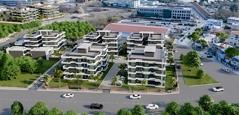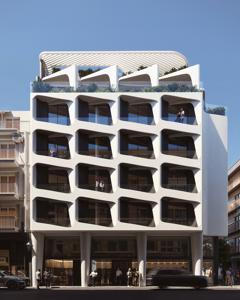
The rise in rental prices, limited housing availability, and increasing difficulty in accessing affordable housing for young people, vulnerable households, and the middle class, make a coherent and ambitious housing policy imperative.
A central tool of this strategy is the Social Antiparochi program, a measure that, as emphasized by the competent Minister, Domna Michailidou, in an interview with the Athens-Macedonian News Agency (AMNA), should have been activated years ago. Greece possesses hundreds of inactive public properties, many of which are located in areas with high housing pressure. Their utilization is not merely a developmental choice but a social necessity. Through the Social Antiparochi program, underutilized public assets are converted into modern housing, with a clear commitment that at least 30% will be offered at affordable rent to socially and economically vulnerable citizens. Tender procedures are expected to be announced within 2026, with the aim that the first social housing units will be available by 2027.
The utilization of inactive military camps, for the first time treated as social housing zones, also plays a significant role in increasing supply. Their conversion into organized residential complexes could add thousands of new apartments, particularly in urban areas where the housing problem is most acute. This intervention carries a strong social impact, combining urban redevelopment with the fulfillment of real housing needs.
Simultaneously, the government is implementing a new, significantly enhanced program for the renovation of old and vacant properties. With subsidies reaching up to 90% and a maximum amount of €36,000, the program aims to activate thousands of properties currently outside the market. A small portion will also cover owner-occupied homes. The income threshold for participation is €35,000 for a couple, with an additional €5,000 per child.
Special consideration is given to public servants working in regional areas, such as teachers, doctors, and nurses. The reimbursement of two months’ rent per year constitutes a meaningful relief measure, facilitating their continued residence in areas under significant housing pressure and with high social needs. Complementarily, municipalities and regional authorities gain the ability to upgrade municipal or state buildings and convert them into housing for public servants, with 1.5% of regional programs earmarked exclusively for this purpose.
In the housing market, interventions in short-term rental regulations are also significant. The new restrictions, particularly in Athens (where new leases are prohibited in the 1st, 2nd, and 3rd districts) and Thessaloniki, aim to return more properties to long-term rental, thereby balancing the market. Automatic removal from the registry upon property transfer further enhances the availability of housing for permanent residents.
Additionally, a new framework of incentives is being established for private investment in affordable housing. Companies constructing or converting buildings exclusively for leases of at least ten years will be eligible for tax deductions on rental income. This regulation aligns Greece with successful European social housing models and encourages the creation of an organized stock of rental housing.
Finally, the upcoming urban planning regulation by the Ministry of Environment, allowing for the rapid conversion of non-residential properties, such as old industrial facilities, into housing, is particularly significant. This regulation can immediately release new housing stock by utilizing buildings that currently remain inactive.
All of these initiatives fall within a broader European framework. The EU has already mobilized at least €43 billion for housing-related actions within the current Multiannual Financial Framework 2021–2027. These funds come, among others, from the Recovery and Resilience Facility, Cohesion Policy, InvestEU, the LIFE program, and Horizon Europe.
At the same time, the European Commission is establishing a Pan-European Investment Platform, in collaboration with the European Investment Bank and national development banks, to scale up investments in social, affordable, and sustainable housing. National development banks have also committed to investing up to €375 billion by 2029.