The full opening of the museum is scheduled for the second half of 2026, following more than a decade of delays.
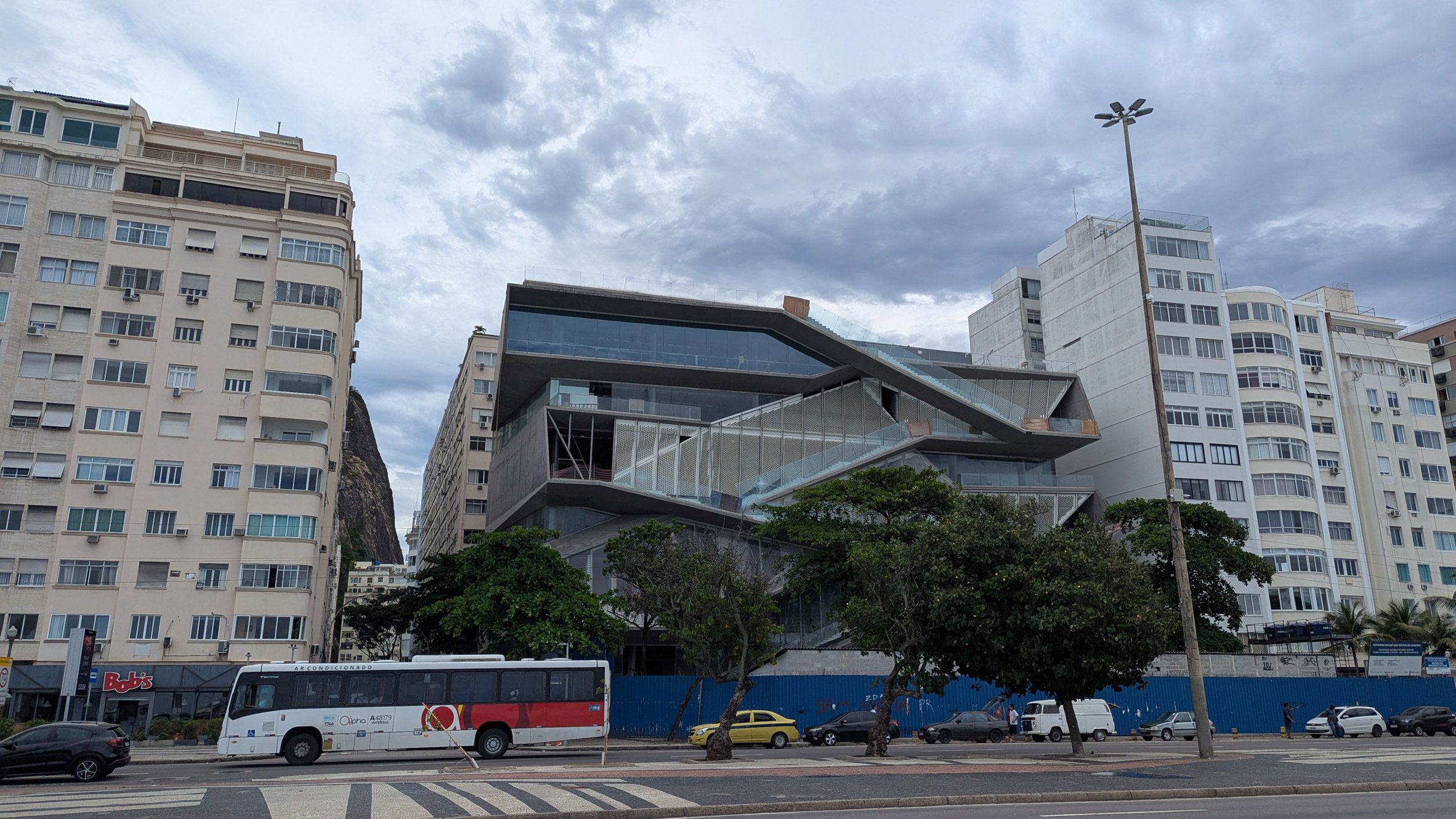
The new building, located in the Copacabana area, has been under construction since 2010 and is set to replace the existing museum in the Lapa neighborhood. Recently released photographs reveal the building’s multi-level form and the striking large-scale ramps, which are a key element of the design.
According to local media, by autumn 2025 the project’s structural and load-bearing elements were largely completed. Following the completion of the building envelope in early 2026, work will begin on outfitting the interior exhibition spaces, which will be carried out under the supervision of the non-profit Roberto Marinho Foundation.
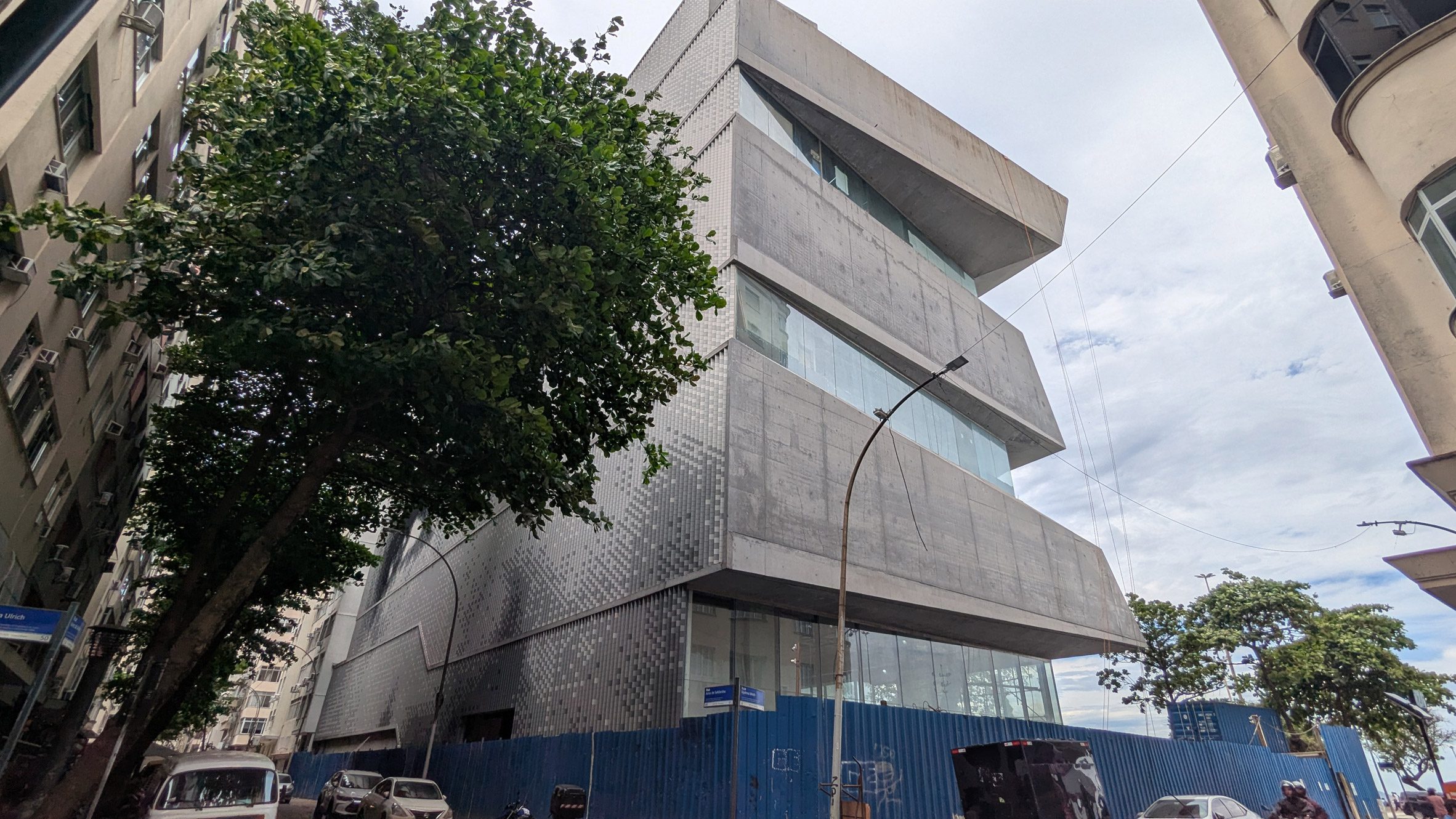
The initial designs for the museum were presented in 2009, with completion originally scheduled for 2014. However, construction was significantly delayed, initially due to technical issues—such as water infiltration on the first two floors—and later as a result of financial difficulties. The project remained essentially “frozen” during 2016–2021 and was also affected by Brazil’s fiscal crisis in 2016.
The building’s design is a “vertical” architectural homage to the characteristic black-and-white wave patterns of Copacabana’s sidewalks, which stretch along the beach. The rear façade of the museum is clad in grey and white tiles forming a portrait of Carmen Miranda, the iconic Brazilian singer and actress who achieved international recognition in the 1940s.
The new MIS will host an extensive audiovisual collection, with a focus on Brazilian culture and local artists, reinforcing Rio de Janeiro’s role as a cultural hub. The project is funded by both public and private entities, although in recent years the majority of its implementation has been overseen by the municipal authorities.