Nearly a century after its construction and following a tumultuous decade of renovations and unfulfilled expectations, the space officially passes into the hands of Ergon Agora, led by brothers Thomas and George Douzis.
According to reports, the current phase involves a “race against time,” with the aim of unveiling the new era of Modiano to the public before Easter 2026. This is an ambitious timeline, yet considered achievable given the experience and methodical organizational approach of the new management team.
Ergon has already demonstrated its ability to elevate iconic properties and transform spaces into hubs of aesthetic and gastronomic distinction — a vision it evidently intends to apply to Modiano as well.
Rediscovering Its Character
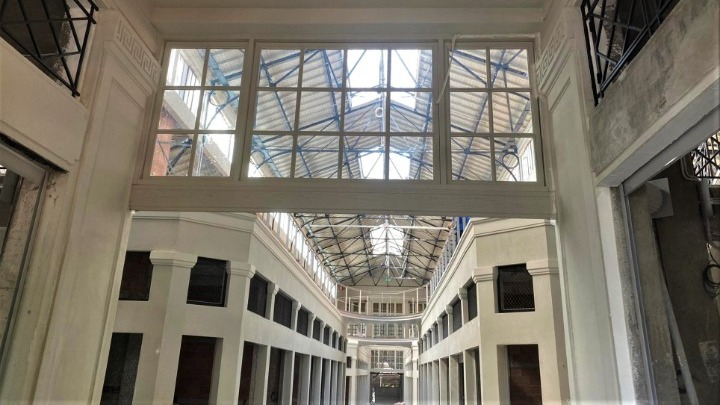
The arcade, built in the 1920s by architect Eli Modiano, was for decades the commercial and social heart of Thessaloniki. With its distinctive architectural character, central city location, and enduring connection to the daily life of residents, it served as a meeting point, marketplace, and cultural landmark. However, its character gradually deteriorated from the 1980s onward, leading to significant decline. The major redevelopment undertaken a few years ago by the Fays Group appeared to offer a historic opportunity: to revive a market that had nearly faded into oblivion.
Despite an investment of approximately €10 million in high-standard renovations and the creation of a modern food hall, the project was never able to achieve the momentum required to be financially sustainable, according to the Fays Group. While the market’s reopening in 2022 generated optimism, the model implemented faced multiple challenges, including underperforming leases, high operating costs, the absence of a steady clientele, and ongoing losses.
It should also be noted that the concession contract grants Ergon Agora 12+3 years to execute this ambitious plan. This indicates that the project is viewed not as a short-term commercial opportunity but as a long-term investment that will shape the identity of Thessaloniki’s historic center. While the timeline leading up to Easter 2026 may seem tight, those familiar with Ergon’s operations describe a team that works with speed, precision, and consistent aesthetic excellence.