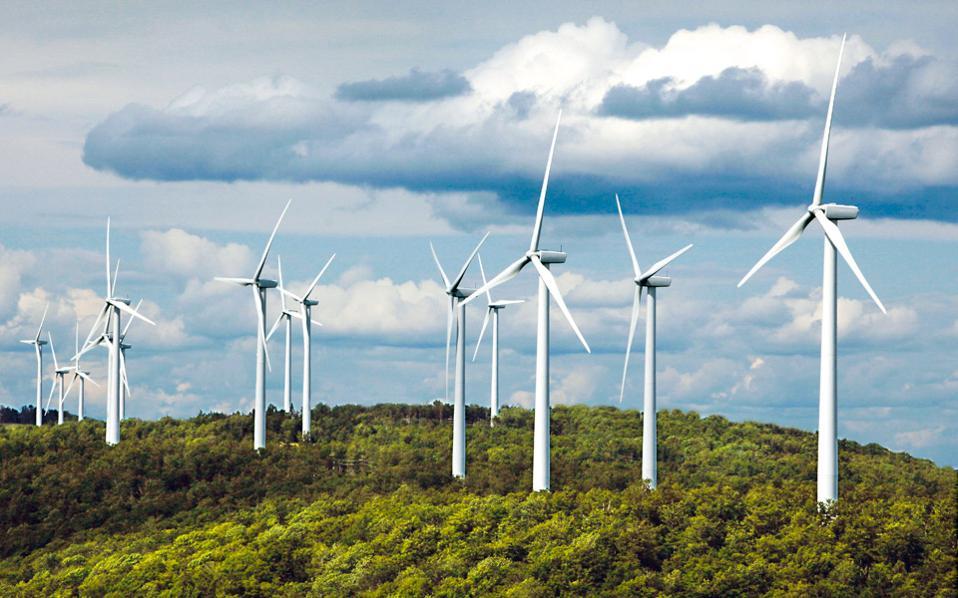
Based on ongoing and planned investments, Greece’s total installed wind power capacity is projected to exceed 6.5 GW within the next year and a half.
During 2025, 76 new wind turbines with a combined capacity of 340 MW were connected to the grid, representing investments exceeding €420 million. This growth corresponds to a 6.4% increase compared to the end of 2024, marking the sector’s return to its average growth rate of the past decade after the notable slowdown experienced in 2024.
According to the Hellenic Wind Energy Association (ELETAEN), this rebound demonstrates the resilience of the wind energy sector, despite a challenging environment characterized by administrative hurdles and bureaucratic delays. The Association attributes the recovery to the efforts of wind energy companies, their leadership teams, and the scientific and technical talent driving project design and implementation.
The investment pipeline for the coming period remains robust. By the end of 2025, over 1.1 GW of new wind farms were either under construction or already contracted, with the vast majority expected to be connected to the grid within the next 18 months. In addition, approximately 200 MW have been selected through competitive tenders and have submitted the necessary guarantee letters, further strengthening the prospect of surpassing 6.5 GW of total installed capacity.
Geographically, Central Greece leads the country with 2,466 MW, accounting for 43.3% of total wind capacity, followed by the Peloponnese with 790 MW (13.9%) and Eastern Macedonia–Thrace with 535 MW (9.4%). This distribution underscores the concentration of wind energy projects in regions with the highest wind potential.
The growing contribution of wind power to Greece’s energy mix is also evident in the operational data from the Hellenic Interconnected System in 2025. The highest hourly wind penetration reached 97.2% on April 28, 2025 (04:00–05:00). Over 616 hours throughout the year, wind generation alone supplied more than 50% of electricity demand. Combined wind and solar penetration exceeded 50% for 3,335 hours and reached or surpassed 100% of demand for 212 hours.
ELETAEN emphasizes that these figures highlight the increasingly central role of renewable energy in Greece’s energy system, while also pointing to the need for enhanced infrastructure, storage capacity, and grid flexibility to fully harness the growing potential of wind power.